
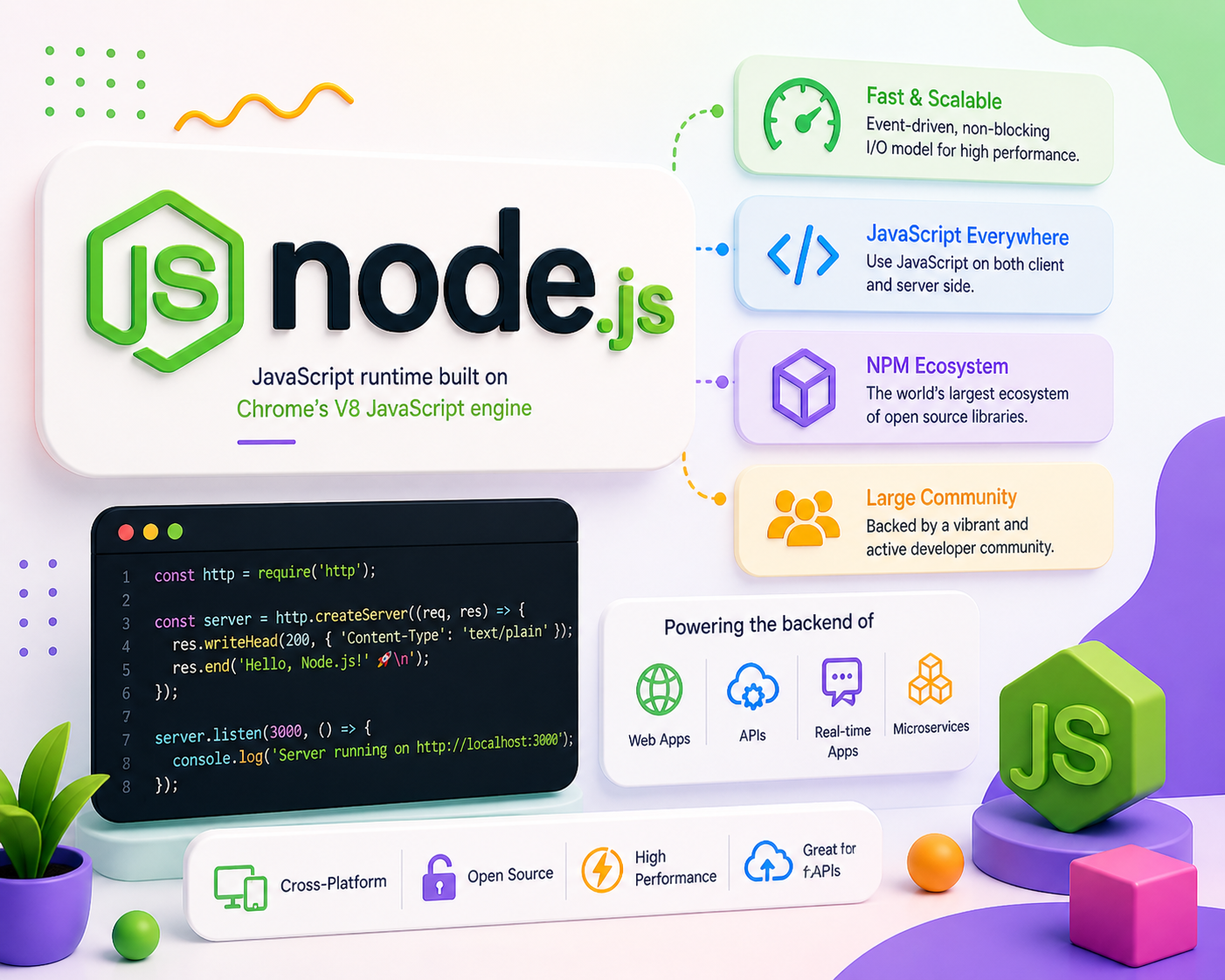
Node.js takes JavaScript - the language that runs in the browser - and makes it run on a server. This means the same language that handles the frontend of a web product can also handle the backend. One language across the full stack. For a team building a web product, this is a genuine practical advantage - engineers can work across both sides, knowledge transfers cleanly, and the codebase has fewer sharp edges between the parts that different people own.
Node.js is built for the modern web-where speed, scalability, and real-time interaction are non-negotiable.
The way Node.js handles requests is different from older server technologies. Traditional servers create a new process or thread for every incoming request and wait for it to complete before handling the next one. Node.js handles many requests at the same time without waiting - when one request is waiting for a database response, Node.js is already handling the next one. This makes Node.js efficient under the kind of load that real web products experience - many users doing many things simultaneously - without requiring expensive server hardware to keep up.
Node.js has one of the largest package ecosystems of any programming environment. Almost any integration a product needs - payment processing, email sending, PDF generation, image manipulation, third-party APIs - has a well-maintained package available. We evaluate packages carefully before using them in production, looking at how actively they are maintained, how widely they are used, and whether they have known security issues. The ecosystem is an advantage when used with judgment.
What this means for your product:
- The same language on frontend and backend - less complexity, faster development
- A server that handles many simultaneous users efficiently
- Access to a vast ecosystem of integrations and tools
- A runtime that is well understood, widely deployed, and well supported
Chips:
Node.js · npm · Event Loop · Async/Await · REST APIs · WebSockets · Streams

