
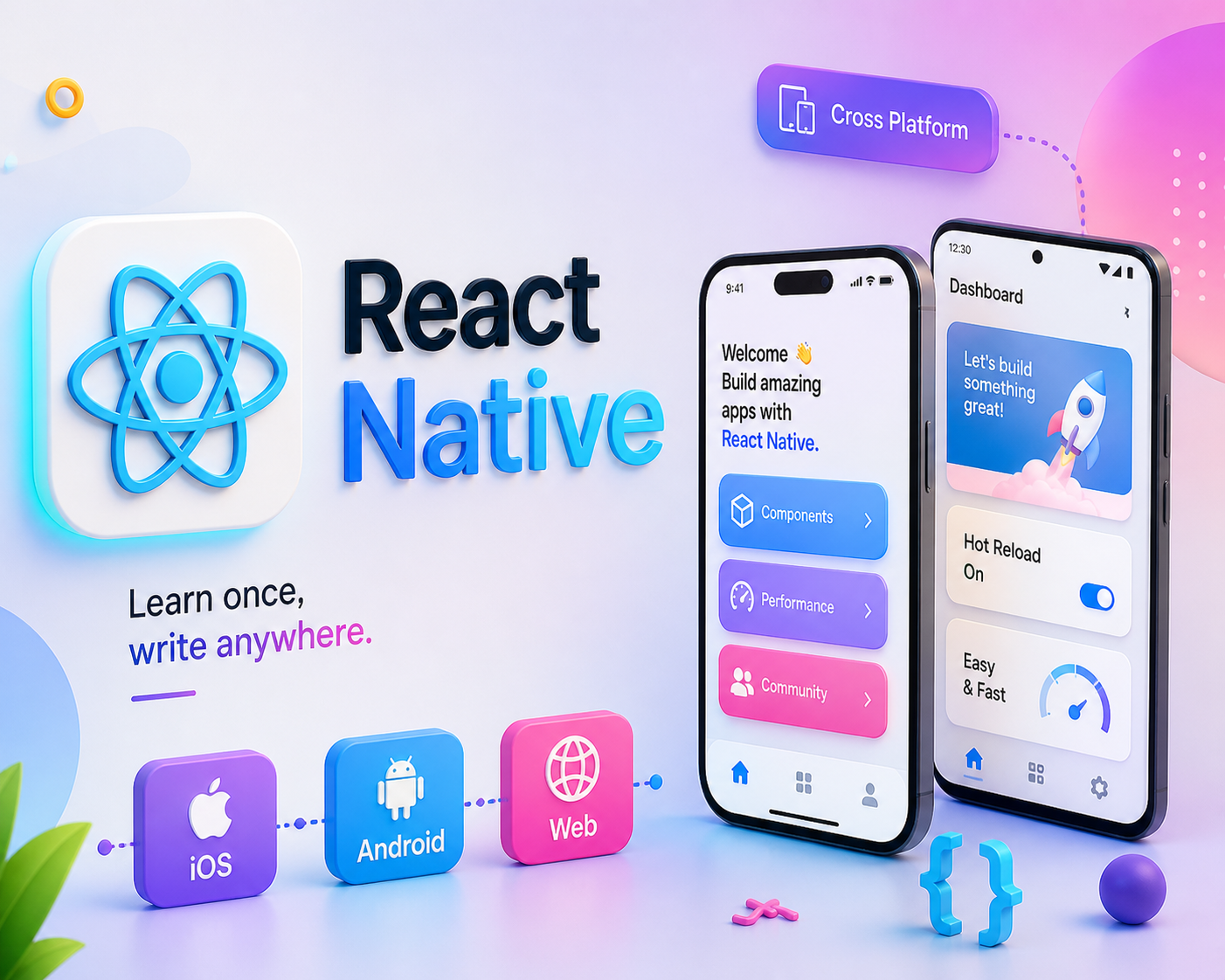
Building a mobile app traditionally meant building it twice - once for iOS in Swift or Objective-C, and once for Android in Kotlin or Java. Two separate codebases, two separate teams, two separate release cycles, twice the cost to maintain. React Native changes this. You write the application once in JavaScript and it runs on both platforms. The same code that powers the iOS version powers the Android version, and both feel like native apps - not a website wrapped in a mobile shell.
The reason React Native apps feel native is because they are native. React Native doesn't render a web view. It renders actual native components - the same iOS buttons, the same Android text inputs, the same platform-specific navigation patterns that users are already familiar with. Gestures feel right. Animations run at the frame rate the device was designed for. The app behaves the way users on each platform expect it to behave, even though it was built from a single codebase.
We handle the full lifecycle of a React Native project - from the first screen to the App Store and Google Play. That includes the parts that are easy to underestimate: setting up push notifications correctly so they arrive reliably on both platforms, implementing offline support so the app keeps working without a connection and syncs when it reconnects, handling deep links so the app opens to the right screen from an email or notification, and preparing the submission materials that Apple and Google require before an app can go live.
What this means for your product:
- One codebase maintained instead of two - lower ongoing cost
- A genuinely native feel on both iOS and Android
- Push notifications, offline support, and deep linking handled properly
- Full delivery including App Store and Google Play submission
Chips:
React Native · iOS · Android · Expo · Firebase · Push Notifications · Offline Support · Deep Linking

